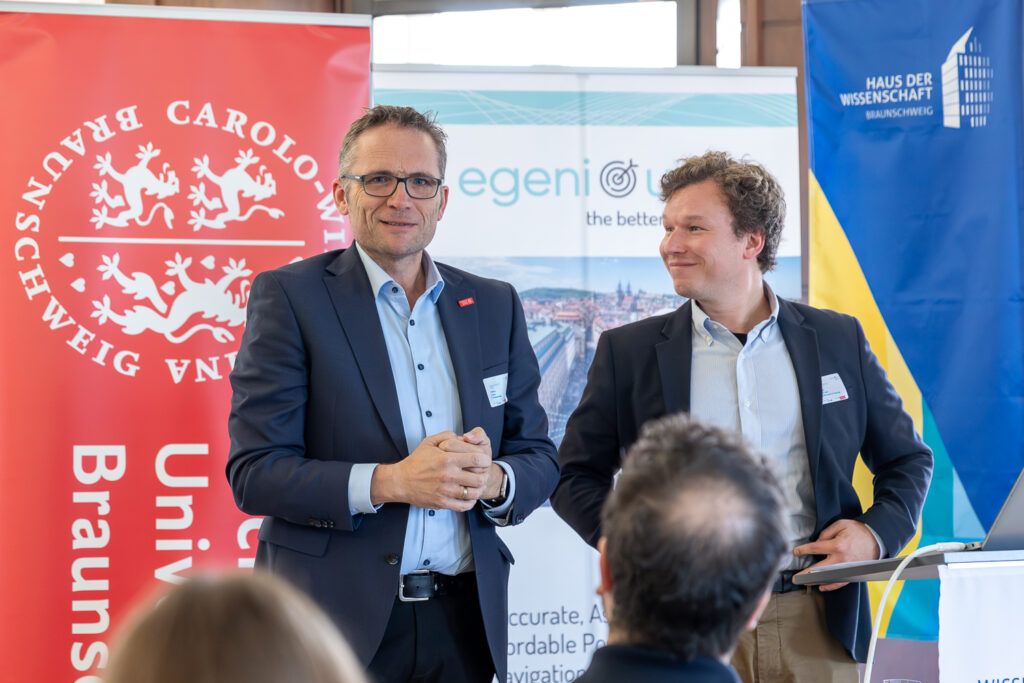
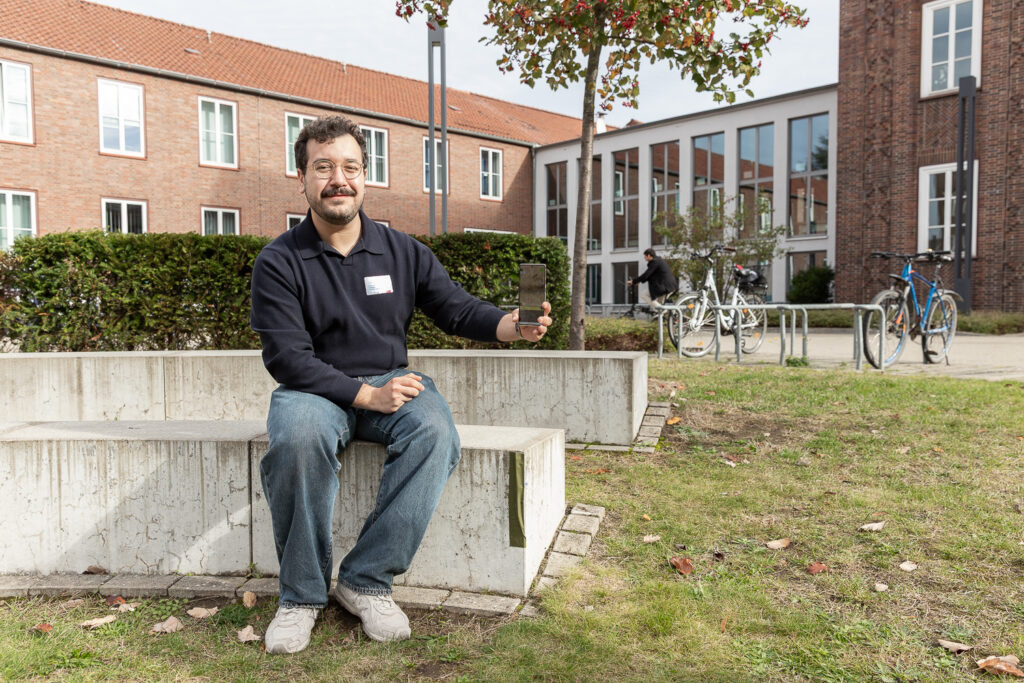
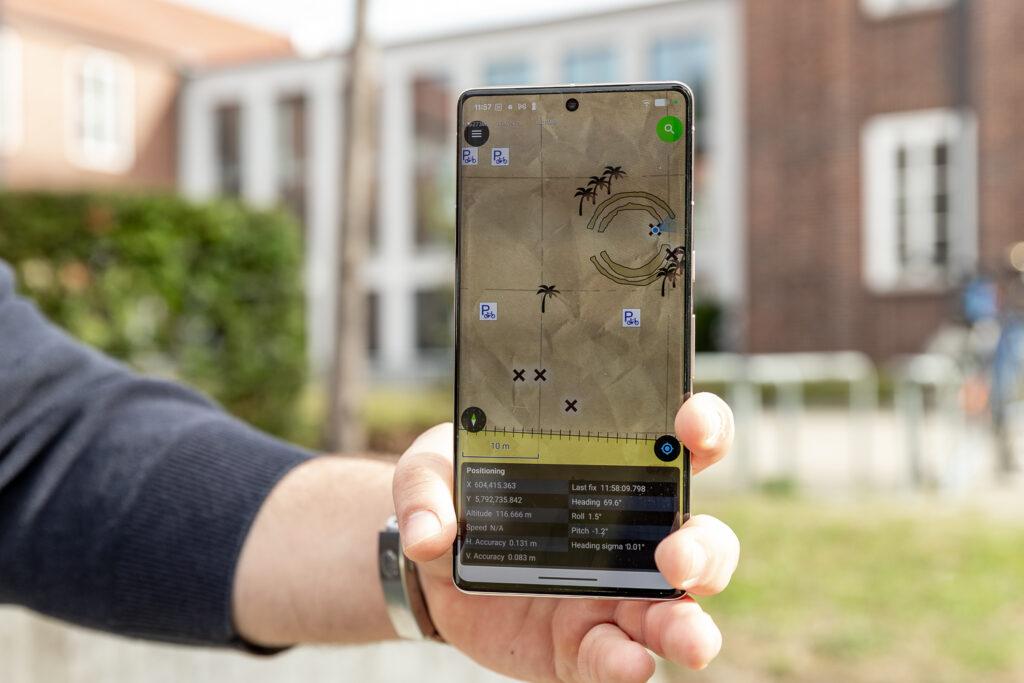
Berit Mohr (OPENGIS.ch) led a surveying exercise using QField, an open-source application for field mapping. Participants were challenged to locate specific objects around the venue, demonstrating how improved positioning could support surveying, mapping and urban infrastructure maintenance.
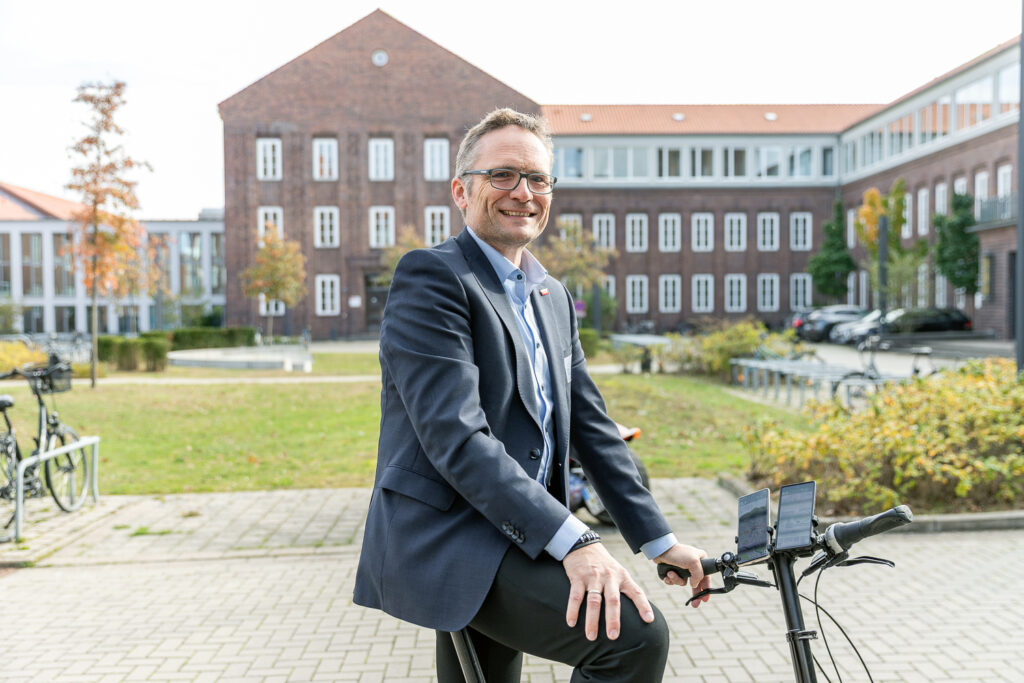
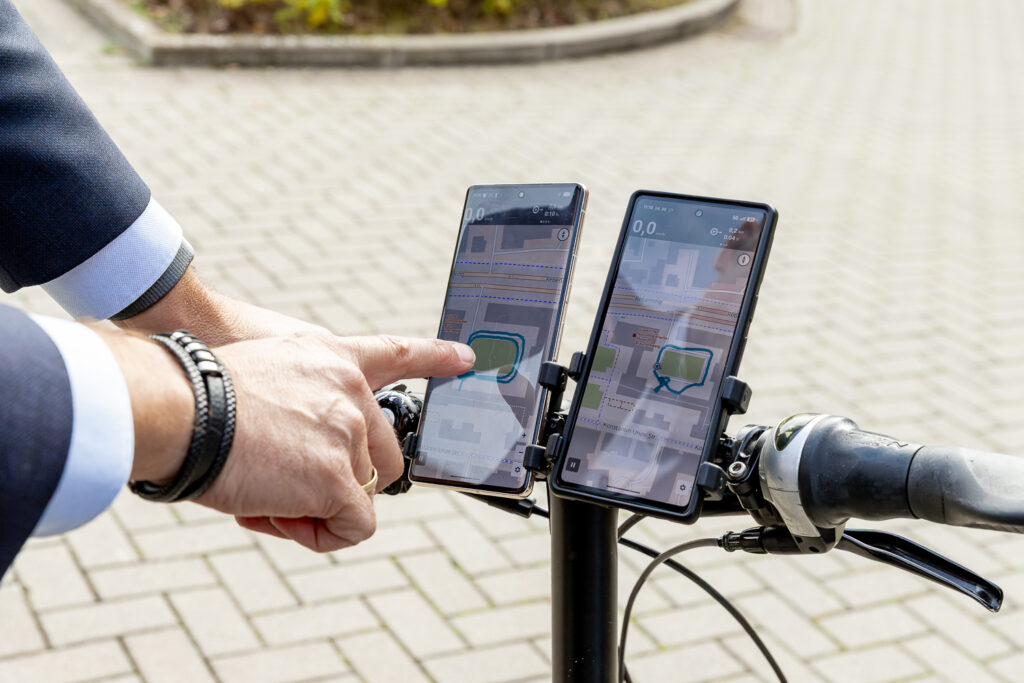
Meanwhile, Achim Hennecke (beemo GmbH) guided participants on a cycling route around the Haus der Wissenschaft using Naviki, a navigation app incorporating egeniouss technology. The demonstration showed how more accurate positioning could improve cycling navigation and route recording in urban areas.
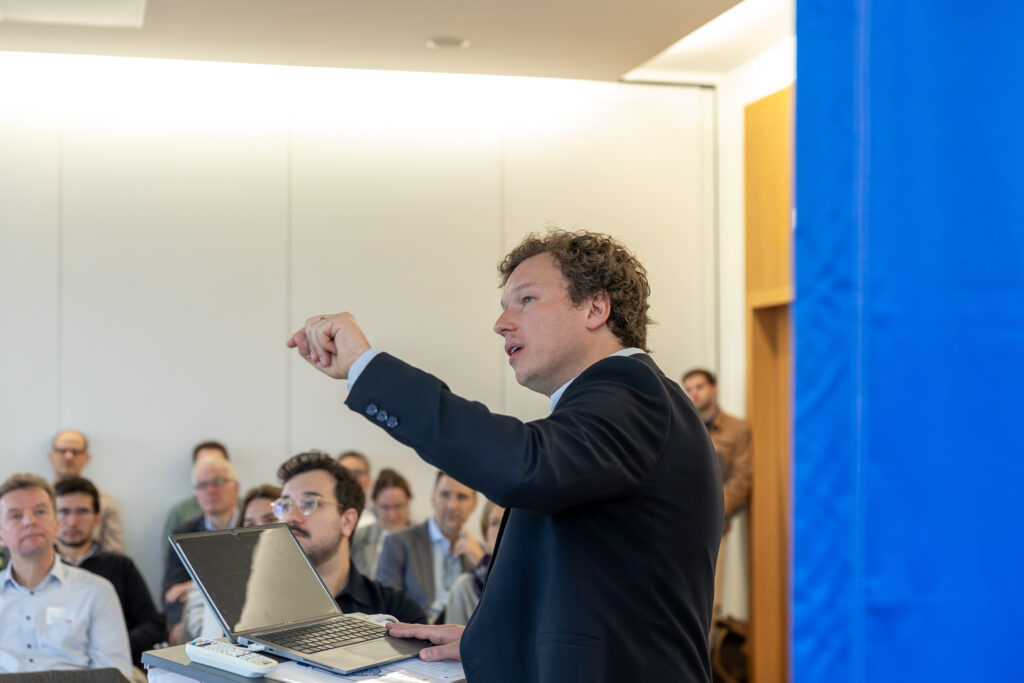
The programme also included a presentation by Daniel Castillo (CAT UAV) on drone localisation, addressing the challenges of positioning and navigation when satellite signals are limited or unavailable.
An expert panel brought together Thorsten Schrader (Physikalisch-Technische Bundesanstalt, PTB), Peter Joosten (Cyclomedia) and Antje Schaper (Leibniz Universität Hannover), alongside Phillipp Fanta-Jende (AIT). The discussion focused on reliable positioning, the potential applications of the project’s technologies and the challenges of bringing research results into practical use.
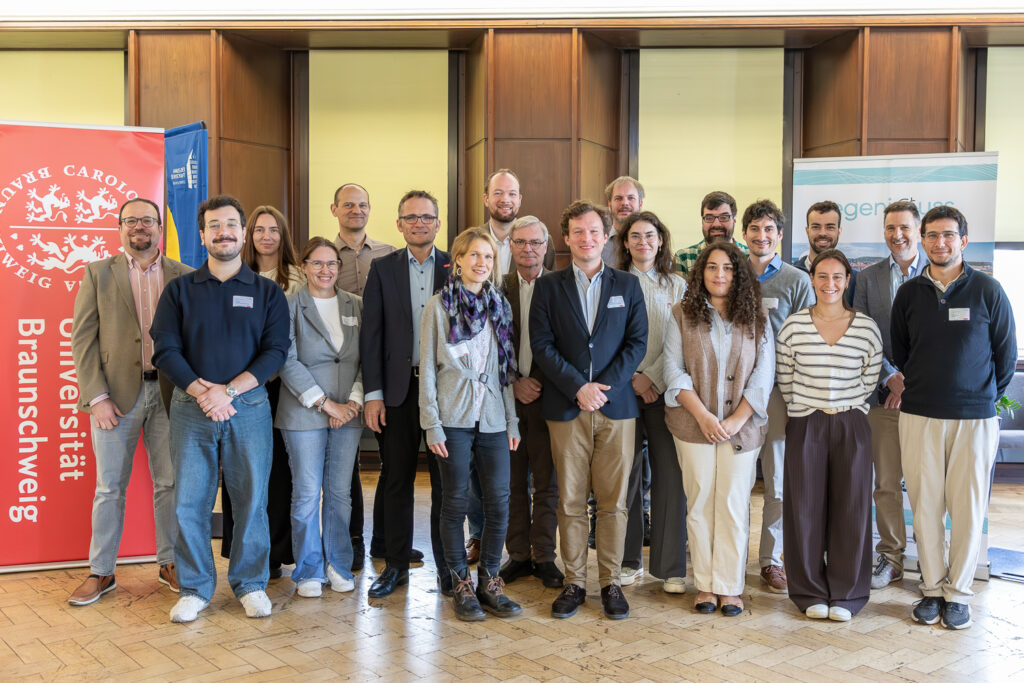
The event marked the conclusion of four years of work exploring how European satellite navigation, visual localisation and other sensors can be combined to improve positioning accuracy and reliability. It provided an opportunity to share the consortium’s results, demonstrate their use in different applications and discuss their potential beyond the project.